Charting Backup Relay Protocols That Preserve Viewer Continuity During Sudden Hardware Failures in Remote Arena Events
Clara Brooks · Nov 1, 2026
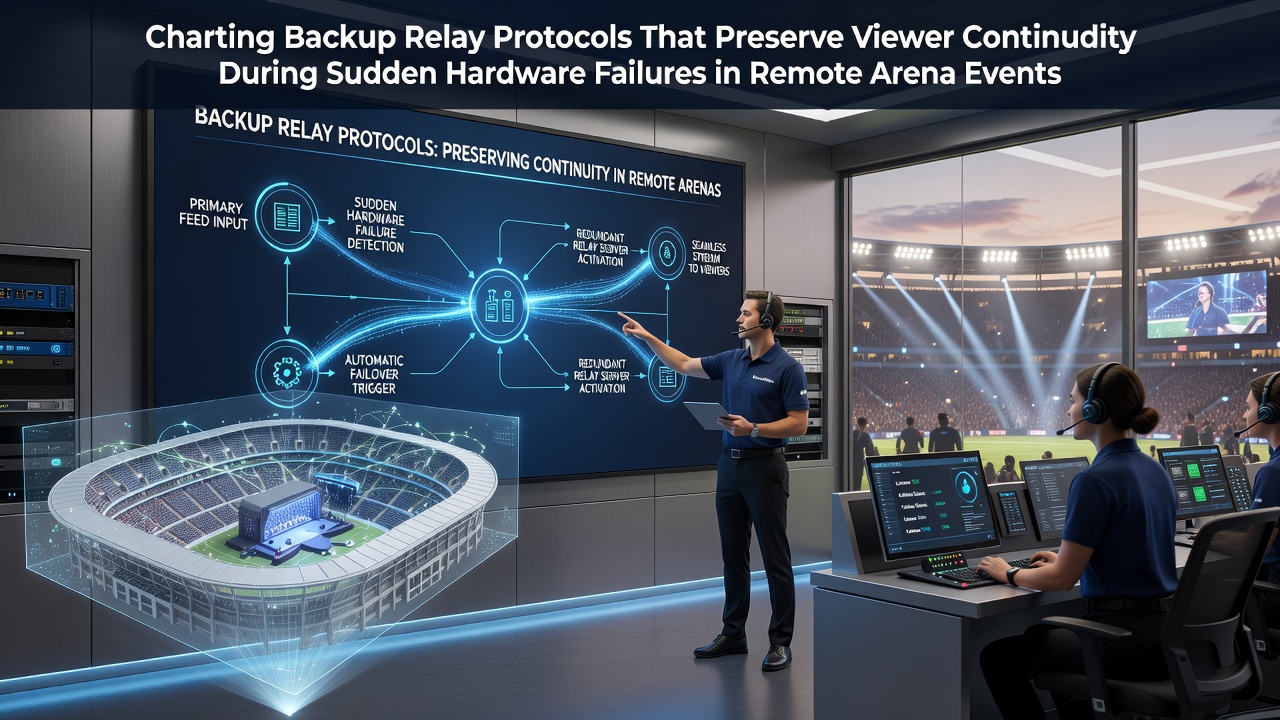
Charting Backup Relay Protocols That Preserve Viewer Continuity During Sudden Hardware Failures in Remote Arena Events
Remote arena events demand robust systems because sudden hardware failures can interrupt live broadcasts and drive viewers away, yet protocols exist that switch seamlessly between primary and secondary paths to maintain continuity without noticeable drops in feed quality. Engineers design these relay mechanisms around redundant encoders, cloud-based failover servers, and protocol standards such as SRT and RIST that detect packet loss or device crashes within milliseconds and reroute streams automatically.
Core Components of Relay Architectures
Primary setups in arena environments typically include multiple capture cards feeding into dedicated encoding stations, while backup relays operate on separate power circuits and network uplinks that activate the moment sensors register anomalies like overheating GPUs or fiber cuts. Data from industry reports shows that such layered configurations reduce downtime by over 90 percent in high-stakes tournaments where single points of failure previously caused multi-minute blackouts. Observers note that synchronization between main and relay streams relies on timestamp alignment protocols that keep audio and video frames matched even after a switch occurs.
Handling Network and Power Disruptions
Network instability remains a frequent trigger for hardware-related issues in remote venues, so protocols incorporate adaptive bitrate adjustments that lower resolution temporarily on the backup path until stable conditions return. Research from the University of Melbourne indicates that combining local edge servers with geographically distributed cloud relays cuts latency spikes during cross-continent feeds and preserves viewer sessions through events that span several hours. Power fluctuations, meanwhile, get mitigated by uninterruptible supplies paired with automatic generator handoffs that keep both primary and secondary systems online without manual intervention.
Implementation in Live Tournament Settings
Teams coordinating arena broadcasts often map out failure scenarios in advance and test relay triggers under simulated loads that mimic peak attendance periods. During November 2026 arena circuits, organizers integrated these protocols across multiple venues to handle simultaneous events where one site's encoder failure would otherwise cascade into lost audience segments. The process involves pre-configured playlists on relay servers that mirror main content while monitoring tools flag deviations in stream health metrics such as bitrate variance or frame drops.
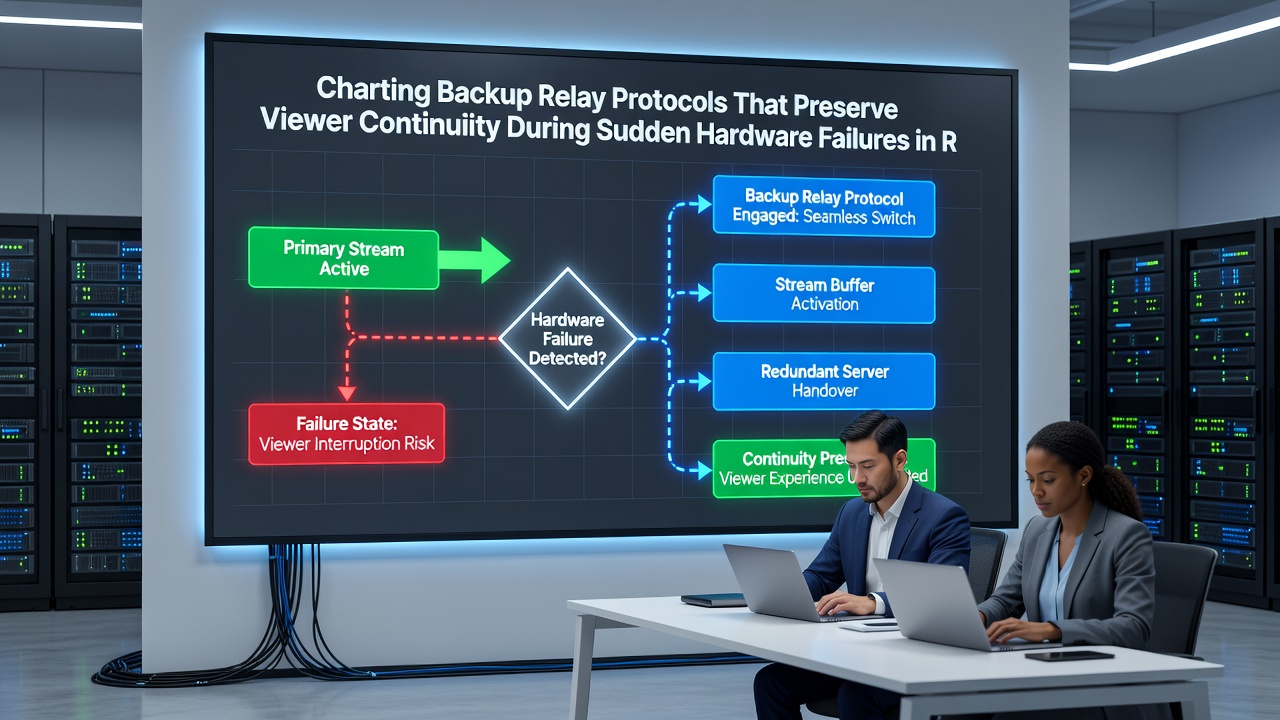
Case examples reveal that venues using dual-path SRT streams experienced viewer retention rates above 95 percent even after hardware incidents because the switch completed in under two seconds and required no user action. Those who've studied deployment logs find that regular calibration of heartbeat signals between encoders and relays proves essential for catching silent failures before they affect output.
Standards and Monitoring Practices
International bodies such as the International Telecommunication Union have outlined guidelines for resilient media transport that emphasize redundant path diversity and real-time telemetry. Broadcast engineers apply these recommendations by logging every relay activation and reviewing metrics post-event to refine trigger thresholds. Data from European regulatory assessments further highlights how venues in varied climates adapt relay hardware to handle temperature extremes that accelerate component wear and increase failure probabilities.
Future Refinements and Testing Protocols
Continuous improvement cycles incorporate machine learning models that predict hardware degradation based on historical telemetry and schedule preemptive switches before outright failures occur. Organizations in Canada and Australia have begun sharing anonymized failure datasets to accelerate protocol standardization across regions, allowing smaller arenas to adopt proven relay frameworks without extensive custom development. Observers note that these collaborative efforts produce measurable gains in stream uptime during extended sessions where multiple simultaneous events strain shared infrastructure.
Conclusion
Backup relay protocols for remote arena events center on redundancy, rapid detection, and automatic rerouting that together safeguard viewer continuity amid hardware disruptions. Implementation draws from established transport standards, venue-specific testing routines, and cross-regional data sharing that refine performance over successive events. As arena productions scale in complexity, these systems continue to evolve through iterative monitoring and protocol adjustments that keep feeds stable regardless of individual component failures.