Leveraging Meteorological Data to Anticipate Connectivity Issues and Optimize Encoding Parameters Ahead of Time for Gaming Event Streams
Morgan Neumann · Sep 6, 2026
Leveraging Meteorological Data to Anticipate Connectivity Issues and Optimize Encoding Parameters Ahead of Time for Gaming Event Streams
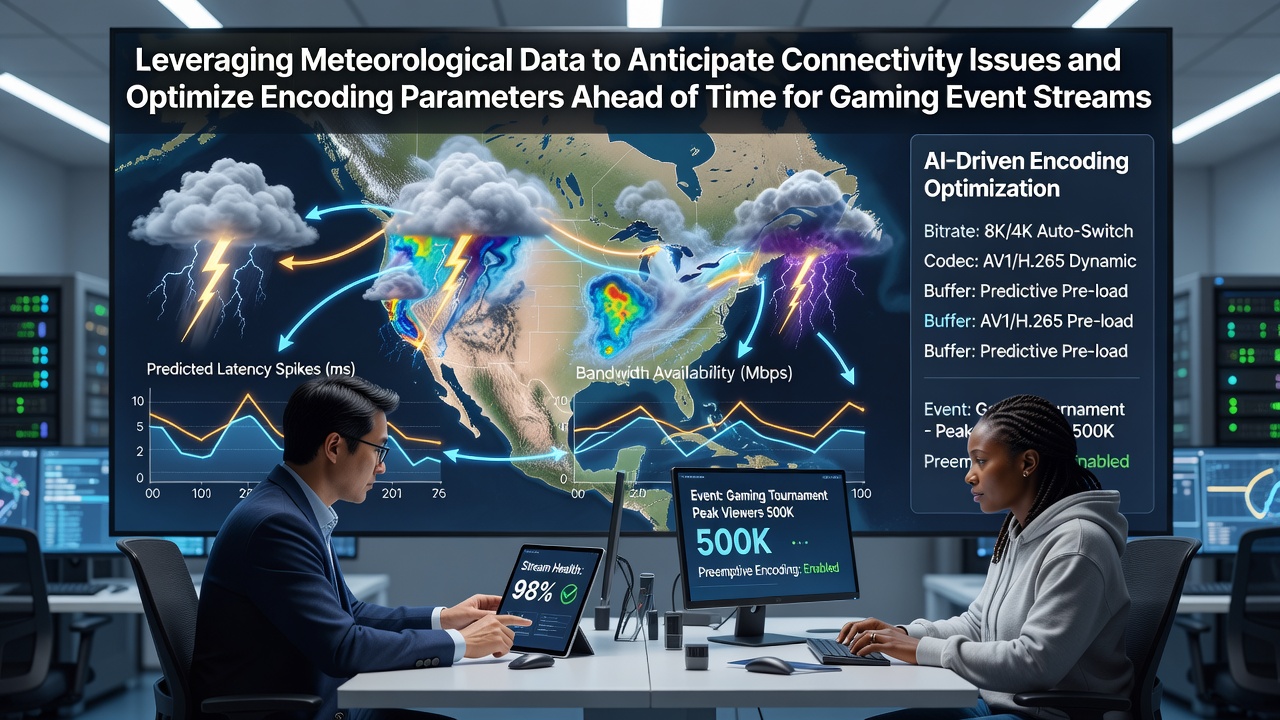
Weather patterns exert measurable effects on wireless and satellite-based network infrastructure that carries gaming event streams, and organizations have begun incorporating meteorological forecasts into operational planning to adjust encoding settings before disruptions occur. Research from the National Oceanic and Atmospheric Administration shows that heavy precipitation and atmospheric moisture levels correlate with increased packet loss on certain microwave and satellite links, while temperature inversions can alter signal propagation in urban environments where many tournaments take place. Data centers and production teams therefore monitor incoming weather reports days in advance to shift bitrate allocations, codec selections, and redundancy protocols in anticipation of changing conditions.
Weather Variables That Influence Network Performance
Precipitation intensity, wind speed, and humidity readings serve as primary indicators for connectivity stability during outdoor or hybrid gaming events that rely on temporary uplinks. Studies conducted by the European Centre for Medium-Range Weather Forecasts demonstrate that rainfall rates above 10 millimeters per hour frequently coincide with elevated latency on Ku-band satellite connections, which remain common for remote tournament sites. Observers note that wind gusts exceeding 40 kilometers per hour can physically misalign portable antenna arrays, producing brief outages that compound when multiple teams compete across continents. Production crews respond by pre-loading alternate encoding ladders that reduce resolution or introduce forward error correction when forecasts indicate these thresholds will be crossed.
Integrating Forecast Data into Production Workflows
Teams integrate public and commercial meteorological APIs directly into their monitoring dashboards so that predicted weather events trigger automated alerts for encoding adjustments. In September 2026, organizers of the Asia-Pacific Esports Championship in Singapore combined regional rainfall predictions from the Meteorological Service Singapore with network telemetry to lower maximum bitrate targets by 15 percent on primary streams during an anticipated monsoon window. This approach allowed secondary feeds to maintain higher quality while the main broadcast switched to a more resilient profile without interrupting viewer sessions. Similar integrations appear at events in North America, where the National Weather Service issues specialized communications forecasts that operators cross-reference against fiber and 5G tower maps.
Encoding Parameter Adjustments Based on Predicted Conditions
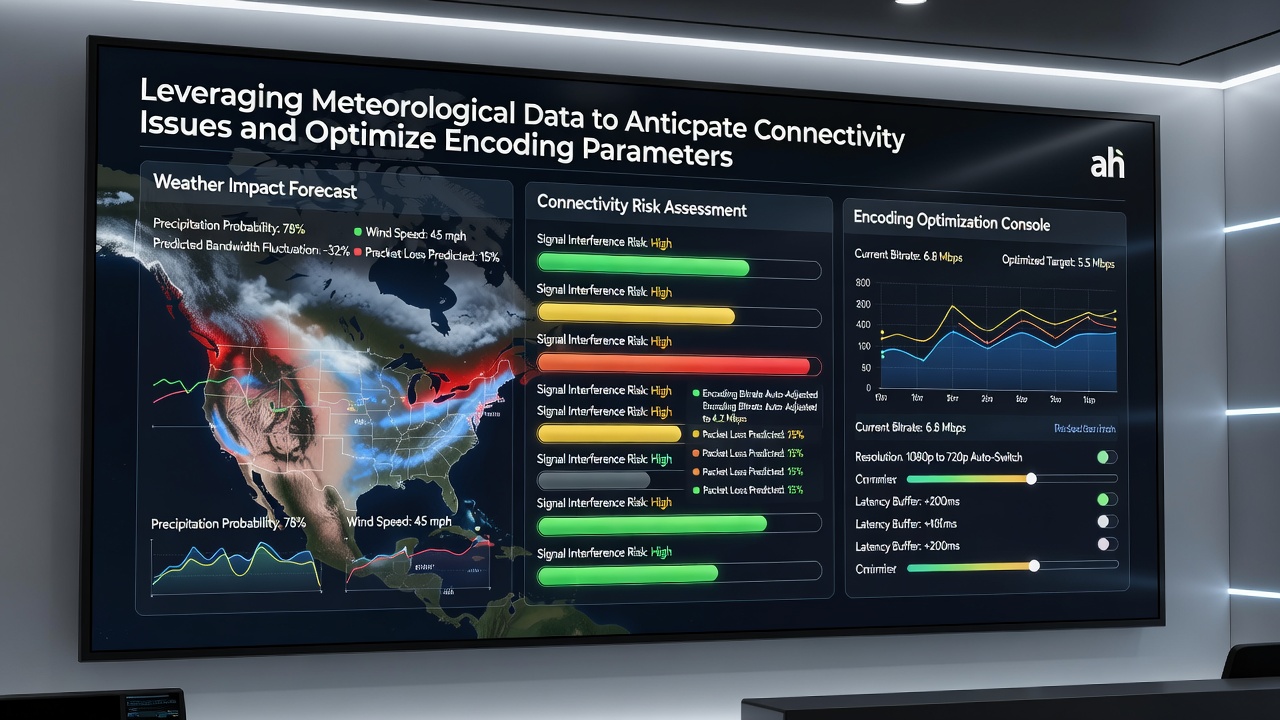
Operators adjust key parameters such as constant rate factor values, keyframe intervals, and audio channel configurations once meteorological models project signal degradation windows. Research published by the Institute of Electrical and Electronics Engineers indicates that increasing keyframe frequency during anticipated rain events reduces visible artifacts when packet loss spikes, even though overall bandwidth consumption rises slightly. Teams also pre-stage multiple adaptive bitrate ladders that favor more efficient codecs like AV1 for stable periods and fall back to H.264 profiles when atmospheric interference is expected. These preemptive shifts occur hours ahead of the weather event, giving encoders time to recalibrate without live intervention.
Case Examples from Recent Tournaments
During the 2025 Global Gaming League finals in Melbourne, production staff used forecasts from the Bureau of Meteorology to schedule a temporary reduction in 4K stream resolution when thunderstorms approached the venue. The change prevented a complete stream failure that had occurred under similar conditions the previous year. In Canada, operators at a multi-city League of Legends qualifier employed Environment and Climate Change Canada alerts to reroute traffic through terrestrial fiber rather than microwave links when freezing rain was projected, maintaining consistent uptime across viewer regions. These examples illustrate how forecast integration moves from reactive troubleshooting to scheduled optimization.
Technical Infrastructure Requirements
Successful implementations require low-latency data pipelines between weather services and encoding software, along with standardized alert thresholds that production teams can configure per event. Software platforms now expose APIs that accept meteorological variables as inputs for bitrate calculators, allowing automatic generation of contingency profiles. Hardware encoders at tournament venues often include redundant power and network interfaces that activate when wind or precipitation sensors exceed set limits, further reducing the window for human error during live segments.
Conclusion
Meteorological data integration into gaming event streaming operations continues to expand as more organizations recognize the direct relationship between atmospheric conditions and network reliability. By combining forecasts from regional agencies with encoding automation tools, production teams maintain stream continuity across variable weather scenarios while preserving resource efficiency. Continued refinement of these systems depends on improved forecast resolution and tighter coordination between meteorological providers and broadcast technology vendors.